Getting Started with Reading Horizons Discovery – Year 1 Professional Learning Course
The above video provides a thorough walkthrough of the Getting Started with Reading Horizons Discovery – Year 1 PL Course. The follwing questions were addressed in the video.
Where does the Overview/Introduction/Start Here module fit into the overall course map or design?
The Course Overview is embedded into the Start Here module at the beginning of the coursework. This allows the learner to have a solid understanding of the goals and expectations for the course. The Start Here module also provides learners with the knowledge of how to begin and where to go with questions.
How is your instructional design approach realized in the modules?
I utilized Fink’s Taxonomy to design the course. The 3-Column table is available for learners to explore in the Start Here module. Everything included in the 3-Column table is then incorporated into the five sessions of the course.
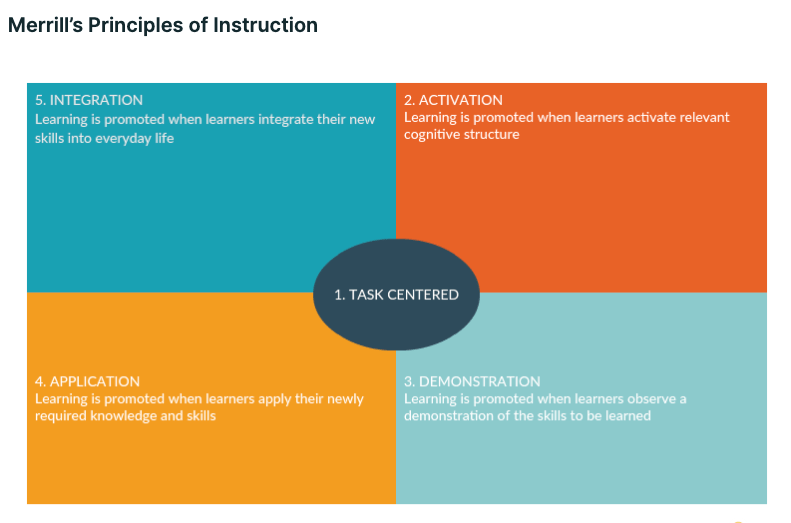
I am also aligning the course with Merrill’s Principles of Instruction (WBT Systems, 2023). The task is to prepare the learner to implement Reading Horizons Discovery successfully in their classroom. Activation happens as learners connect their prior literacy instruction experience and knowledge to the program content, resources and materials. Demonstration is integrated throughout the sessions as learners observe the facilitator demonstrate the skills and classroom strategies necessary to be successful with the program. Application is incorporated throughout each session as learners engage in active learning experiences and practice applying their knowledge in increasingly authentic settings. Finally, Integration happens as learners transfer their knowledge into their program implementation in the classroom during the final sessions of the course.
Where are you sharing the main course goal and outcomes with your learners?
The main course goal is shared in the Start Here module. However, each session includes specific learning objectives, which are shared at the start of the online component and in-person component. The Evaluation Survey helps target if learners feel that we have reached the learning objectives and course goal.
How does the unit/module align outcomes/goals activities and assessment?
The session modules each work through the various learning activities and include embedded assessments as outlined in my 3-Column table shared in the Start Here module. The 3-Column table also clearly aligns these activities and assessments with the desired outcomes.
Is this student-centered or teacher-led?
The course is very learner-centered. However, the course starts off more facilitator-led in sessions 1 and 2, then shifts to be more learner-led as teachers begin implementing the program in their own classrooms with the foundational knowledge they acquired in the first two sessions.
What is the scope or range of the instructor’s role (i.e. Presenter, Facilitator, Coach, Mentor)?
The instructor is primarily acting as a facilitator, then shifting to a coach role as the course progresses.
Is the course blended or fully online?
This course is blended and includes both online and in-person components.
How are you introducing the course and yourself and how are you building the learning community?
I am introducing the course and myself in the Start Here module. I would like to add a brief self-introduction video. It is key that I build the learning community and allow for maximum collaboration and sustainable campus support. I will do this by encouraging discussions via the Google Classroom Stream and peer-to-peer practice and collaboration during in-person components.
What is the ratio or percentage of synchronous to asynchronous collaboration?
Due to the fact that the course is facilitated by RH Certified Facilitators, this course will be 75% synchronous and 25% asynchronous.
How will you address the infrastructure, system, and support needs and issues the learner may face?
There are many supports in place from my organization to ensure that each educator has the necessary resources, materials, and support that they need. These include a team of Product Support Specialists, a dedicated Implementation Manager for each district, and ongoing PL opportunities. Our teams work in collaboration with the school or district administrators to ensure that teachers have the infrastructure and supports that they need. We also invite all who will be working with the program to attend PL. This includes school and district administrators, building leaders (instructional/literacy coaches), paraprofessionals, resource or SPED teachers, etc.
References
Athuraliya, A. (2023, January 5). Top 7 instructional design models to create effective learning material –. Creately Blog. https://creately.com/blog/education/instructional-design-models-process/
Learning science made easy: Merrill’s principles of instruction. Learning Science Made Easy: Merrill’s Principles of Instruction | WBT Systems. (2023). https://www.wbtsystems.com/learning-hub/blogs/merrills-principles-of-instruction


One response to “Implementation Design”
[…] July 22, 2023 Instructional Design Implementation design […]
LikeLike