
WHY
Picture a room full of educators desperate to improve their students’ reading skills, and consequently, their reading test scores. Their district has adopted a new foundational literacy program; today is their chance to learn about it. How will it be different from what they have done in the past? How will they teach it? What new materials will they have?
At the end of the full-day PL event these same educators are tired, brains full of new information, practices, and routines; yet they still aren’t feeling ready to teach their students using the new program. Why not? They didn’t get enough time to practice! As a curriculum-specific PL facilitator, I consistently feel pressed for time to deliver the information that teachers need to know as they begin implementing the program, while including enough active learning and practice to make it memorable and effective for teachers to leave prepared to teach it.
My ‘why’ is to provide effective PL that leaves each attendee feeling competent and confident to implement the program with their students.
In my PL feedback, I often see comments about lack of time to practice, wanting more opportunities for hands-on interaction with program materials, and more engagement. While many adjustments have been made to our PL content over the past two years to solve some of these concerns, there is still something missing. I am encouraged that my organization is willing to listen to facilitator and educator feedback and make changes. I believe that this presentation is a step towards leveraging existing digital resources to align more closely with effective PL principles.
WHAT
HOW
Once I had identified my ‘why,’ I started to think about how to best showcase my call to action. In my organization, less than half of the team players work in the office. The majority live all over the US and work remotely. I decided that a video would work well to quickly and effectively share the call to action in a way that would fit into each individual’s time zone and workflow.
There are many ways to record videos. I have used my phone to record videos, of course, but not to record as I shared a Google Slides presentation. I often present using Google Slides via Zoom, which has a recording capability. However, I have recently been using Loom to create short training videos for customers, so I decided I would try out Loom for this project.
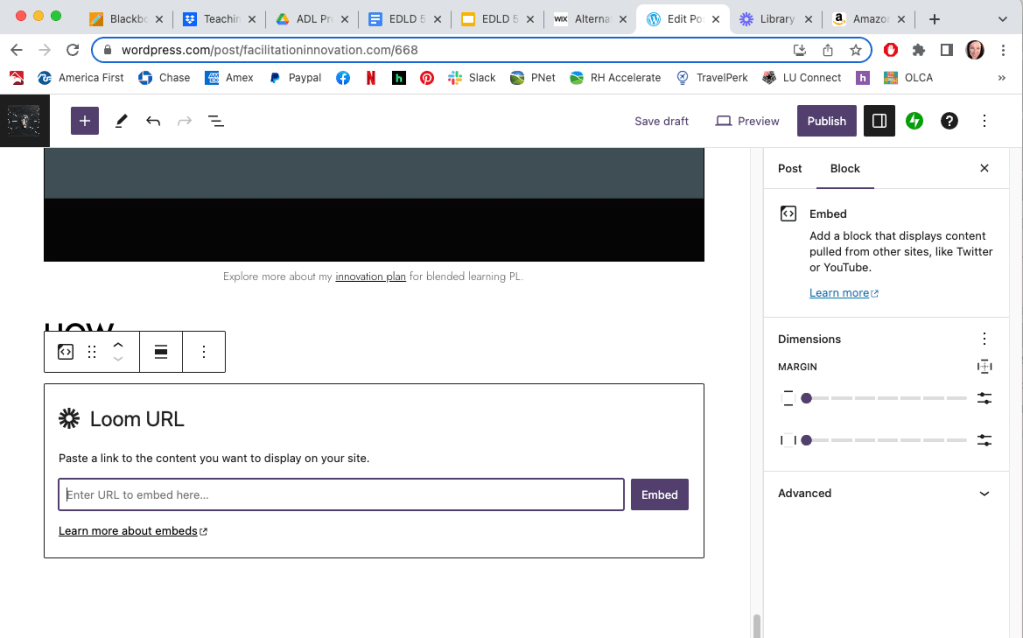
The first test was whether or not I would be able to embed a Loom video in WordPress. I had to do some research to figure it out. Initially, I tried embedding the code for the video, which was unsuccessful. I almost gave up and just used Zoom. But then I searched in WordPress and discovered that there was an option to simply add a Loom link and WordPress would embed the video. It ended up being just as easy to post to my site as a YouTube video.
I also decided to play around with animations in Google Slides for this presentation. I didn’t get too fancy but was able to add a fade feature as my slides advanced. I would like to continue to develop my content creation skills and learn how to incorporate more animation. I appreciate projects that push me out of my comfort zone and force me to figure out something new.
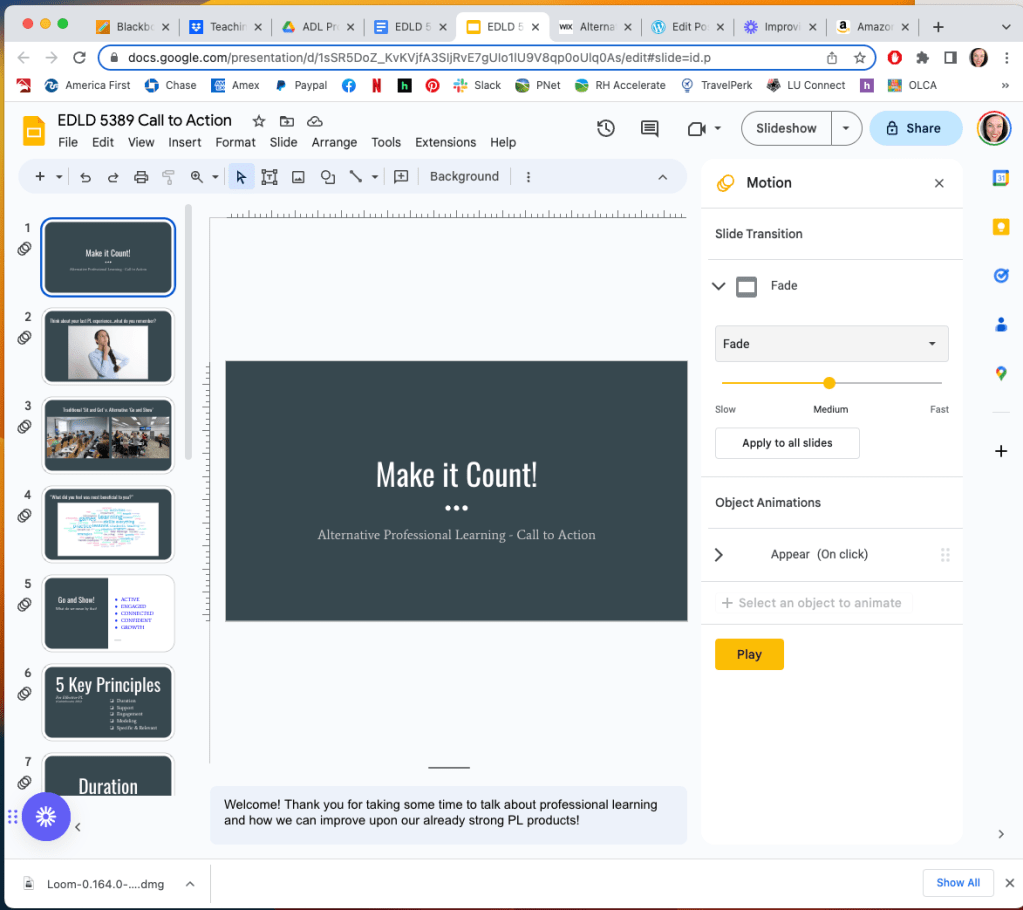
In designing the slides themselves, I kept in mind the design principles presented in the video How to Avoid Death by PowerPoint (Phillips, 2014). Some principles you may notice are using large text to communicate the most important message, simple, minimal text on the slides, no more than 6 objects on the slide, and utilizing contrast with a dark slide background. I was mindful of Simon Sinek’s (2018) advice to speak slowly and let the ideas come from me, rather than from the slides.
I believe that the experience of putting together this call to action has helped me synthesize and put into action the concepts of content creation and presentation that we have been studying in the readings and videos throughout the course. Developing my skills in this area is crucial to my role within my organization and will help me as I strive to lead change in our professional learning approach.
References
Gulamhussein, A. (2013, Sept). Teaching the teachers. Effective professional development in an era of high stakes accountability. Retrieved from Center: http://www.centerforpubliceducation.org/system/files/2013-176_ProfessionalDevelopment.pdf
Phillips, D. J. (2014, April 14). How to avoid death by powerpoint. YouTube. https://www.youtube.com/watch?v=Iwpi1Lm6dFo&ab_channel=TEDxTalks
Sinek, S. (2018, January 10). How to present properly (part 5). YouTube. https://www.youtube.com/watch?v=msvmLlAkOno&t=2s&ab_channel=LifeMentor
 Facilitation Innovation
One response to “Alternative PL – A Call to Action”
[…] Alternative professional learning – A call to Action […]
LikeLike