
Reflection and Comparison: Fink’s 3-Column Table and UbD 3-Page Template
Learning how to design a course is a completely new experience for me. I have delivered lots of instruction and facilitated hundreds of professional learning events over the years, but I was not the one designing the curriculum or the PL content. The concept of designing with the end in mind makes so much sense! I began by learning about Fink’s guide to course design (Fink, 2003). This was a perfect place to start. Fink (2003) provides a process and structure that feels very doable, even for a course design novice like myself.
Fink’s (2003) approach is holistic and focuses on every aspect of creating a significant learning environment. The worksheets that guide the course development are concise and easy to follow. One of the most helpful aspects of the 3-Column table design is that it very clearly allows the designer to see the alignment of outcomes, assessments, and activities. It provides robust support in developing significant learning goals that focus on the learner. It is a broad conceptualization of the course design. This will be especially useful in the early development of additional professional learning pathways in my organization and within my innovation plan.
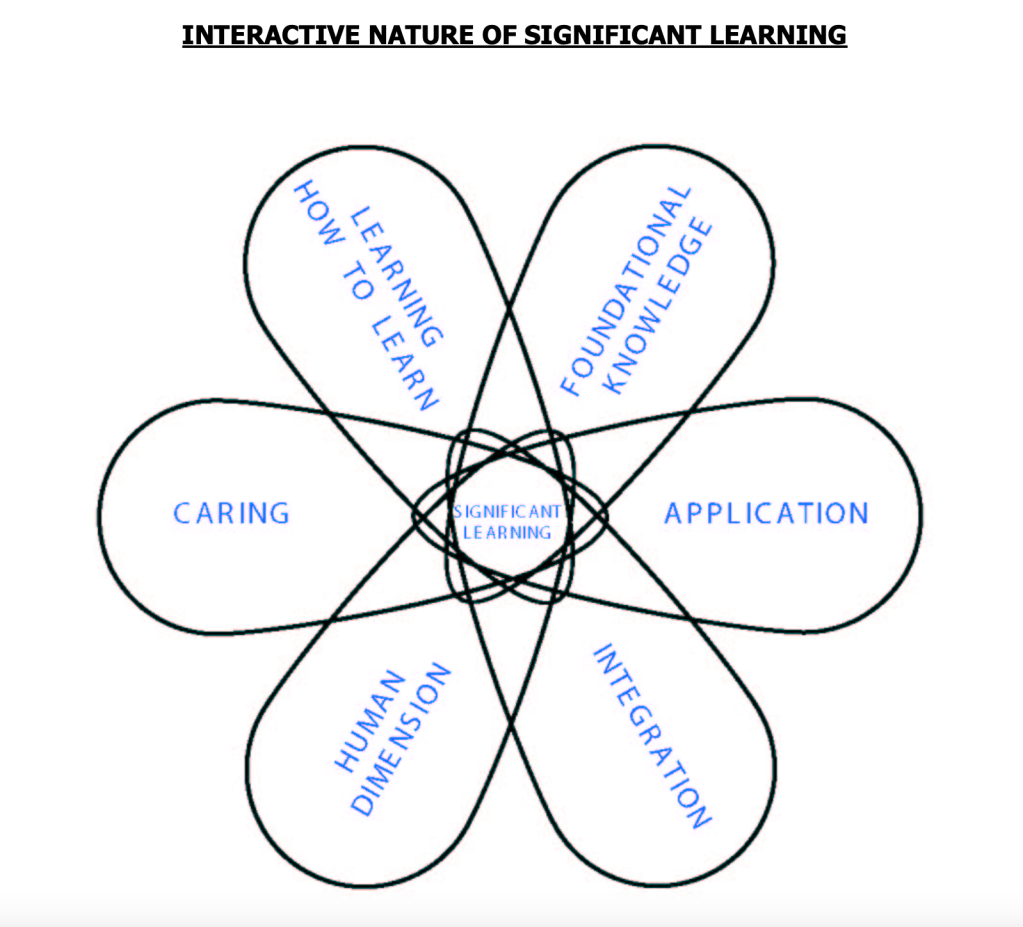
Another resource that I used to explore design was Understanding by Design (McTighe & Wiggins, 2005). This book is a more extensive look at the aspects of course design than Fink (2003). The structure of the UbD 3-page template is more detailed and supports the designer in thinking granularly about learning goals, assessments, and learning activities. I appreciated the detailed examples that UbD presented to help me see the difference between good design and poor design. Utilizing the UbD 3-page template took me from the outline of my 3-column table to a fully developed course. I feel that the UbD method is more appropriate in the later stages of course development and design.
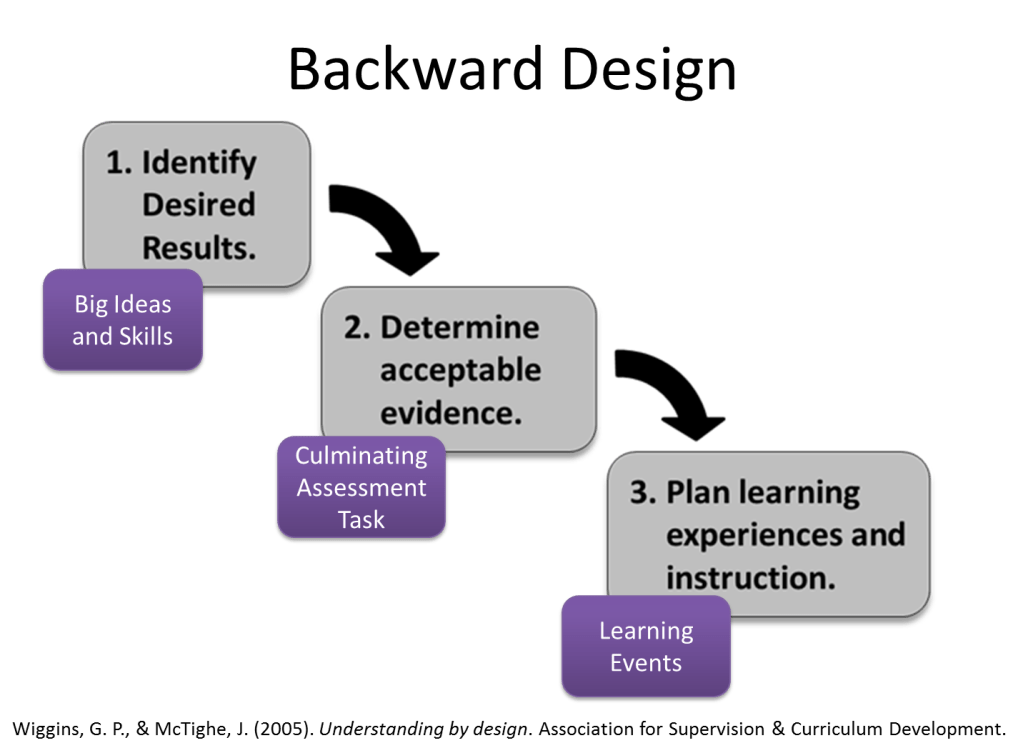
The 3-column table (Fink, 2003) and the 3-page template ( (McTighe & Wiggins, 2005) are both learner-focused. They help the designer to be intentional about identifying the desired learning and understanding outcomes, then employing assessments and activities that connect back to those outcomes. This is key for learner engagement and motivation. Learners are not interested in participating in activities or completing assessments that do not have a purpose. I will rely on both Fink’s taxonomy and the UBD template for my course design in my innovation plan as they organically build on each other. I appreciate Fink’s (2003) concluding design advice: “Like all plans, you need to keep it flexible and subject to change as it is implemented (p. 36).” If I’ve learned anything from my participation in the ADL program, it’s that there is always room for growth.
Resources
Fink, L. D. (2003). A self-directed guide to designing courses for significant learning.
McTighe, J., & Wiggins, G. P. (2005). Understanding by Design, Expanded 2nd Edition. Association for Supervision and Curriculum Development.
Standards for Reading Professionals: A Reference for the Preparation of Educators in the United States. (2010). International Reading Association.


One response to “Understanding by Design: UbD Template”
[…] Understanding by Design […]
LikeLike