Identification and Reflection
Throughout the ADL program, I have been developing components that support my Innovation plan. In my first course in the program, I learned about disruptive innovation. Disruptive innovation is something that changes not just a component of education but the way people think about education. In that course, I chose an innovative idea that could apply within my organization. I first identified who my audience was then wrote a proposal letter for my innovation project. Next, I put together a media pitch to help illuminate the need for my innovation project and to garner interest. Then it was time to think through a timeline and delve into the research surrounding the topic of my innovation project, blended learning. I also compiled an annotated bibliography outlining additional resources for ongoing learning about the topic as I continued to develop this idea.
Big Hairy Audacious Goal (BHAG)
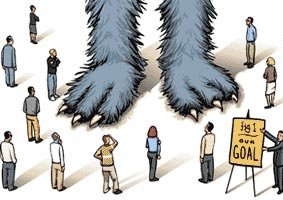
To develop educators who embrace the role of learner and continually strive to reflect and adjust their foundational literacy teaching practices to ensure optimal student outcomes.
In subsequent courses, I had the opportunity to understand additional topics and relate them to my authentic innovation plan. One concept that was woven throughout all the courses, in addition to a specific course, was growth mindset. I put together a growth mindset plan that could be incorporated into my innovation project. In another course I learned about creating significant learning environments and how I could look more holistically at all components of the environment to align assessments, activities, and outcomes for more in-depth learning. The nature of an innovation plan requires organizational change. I enjoyed learning more about leadership and how to influence change within my organization through the influencer model and 4DX. These concepts were all applied to my specific organization and within the context of my innovation project. Anytime you are implementing change there’s going to be resistance. I found learning more about how to have effective crucial conversations to be invaluable as I prepared to present and implement my innovation plan.
As I progressed through the ADL program I had the opportunity to delve into various models of instructional design. Analyzing the differences between Fink’s three column table and Universal Design for Learning helped me consider additional ways of deepening learning within the context of my innovation plan (Fink, 2013). My innovation plan revolves around utilizing Blended learning within a professional learning context. Perhaps the most applicable course was EDLD 5389, where I designed a professional learning strategy that essentially allowed me to outline how I would put my innovation plan into practice. While exploring digital resources related to my innovation plan, I wrote and refined a publication that is being published on my organization’s blog next week. This opportunity to put my ideas out into the world was intimidating but also brought my innovation plan into reality. Finally, I had the opportunity to engage in an action research study on my innovation plan. I was able to think deeply about how I could assess the efficacy of blended learning in a PL setting.
I am proud of the way my Innovation plan has grown from a simple idea into a fully formed, researched, thought-out plan for implementing blended learning in Reading Horizons PL offerings.
Where are you in your innovation project? What, if anything, do you have to complete? By when?
Over the past year, there have been some changes in my role and within the products my organization offers that affected the ability of my innovation plan to move forward. I believe that my innovation plan would likely have been feasible had my role been different. I moved from an independent contract position as a PL Facilitator to a full-time Education Consultant role. In my new role, I do less PL and coaching on the post-sales side, and more product demonstration and presenting on the pre-sales side at the administrator level. I do have the occasional opportunity to work with teachers in a PL capacity, however, it is not the primary focus of my new role.
My organization released an updated curriculum this fall. As part of this update, digital resources were created and launched to facilitate a blended learning experience for our users. While the new product is wonderful and is already impacting educators by supporting their learning throughout the implementation process, it was realized in a way that was different than I envisioned in my innovation plan. At this point in my innovation project, I am putting aside the original idea that I had, thinking about what I have learned throughout this process, and looking at how I can innovate on our new platform to improve the learning environment.
The Learning Process
Initially, it was terrifying to have to come up with an authentic innovation plan. However, once I landed on an idea and started working on the various components outlined above I became more and more excited about the possibilities. Applying all the concepts that I learned throughout this program to an authentic project that applied to my organization was a game changer for my own learning journey. It allowed me to have a voice and to take ownership of my learning as never before. While my innovation plan will not be implemented in the way that I envisioned, I am so grateful for the opportunity that I had to have a consistent, authentic way of viewing and applying my learning. I believe that I am well equipped to look at challenges within my organization through a lens of innovation. I feel confident in my ability to develop plans in the future that will improve learning environments and integrate technology in innovative ways.
What Worked?
I am now working with educators and administrators who are interfacing with our new curriculum and the blended learning PL that is being offered. Since this is the format that my innovation idea has taken, I am now looking at what is working well and what can be improved upon. I believe one of the aspects of this blended learning PL that is extremely effective is the availability of short targeted videos embedded into the preparation section of each lesson. These real-time coaching videos allow teachers to get the information they need right when they need it. These digital resources work in tandem with synchronous face-to-face PL events that occur at the beginning of program implementation as well as job-embedded coaching events throughout the school year. This is the first year schools and districts are using this new curriculum. As we are looking at the effects of our changes, we will continue to iterate based on educator and administrator feedback, as well as observations from our team in the field.
What Could be Better?
One thing that could be improved is accountability for the digital component of Reading Horizons blended learning PL. While administrators can track how many Implementation Essentials videos teachers have engaged with, they cannot track how often teachers are utilizing the lesson-embedded real-time coaching videos. Any resource no matter how well intended or well executed will not be effective if it is not being utilized. So the question is, how can we influence educators to fully engage with all of the PL offerings? I believe we can look to the six sources of influence to help us motivate and encourage full participation in asynchronous PL. Specifically, leveraging social and structural motivations could boost educator engagement, leading to improved instructional practices (Grenny et al., 2013).
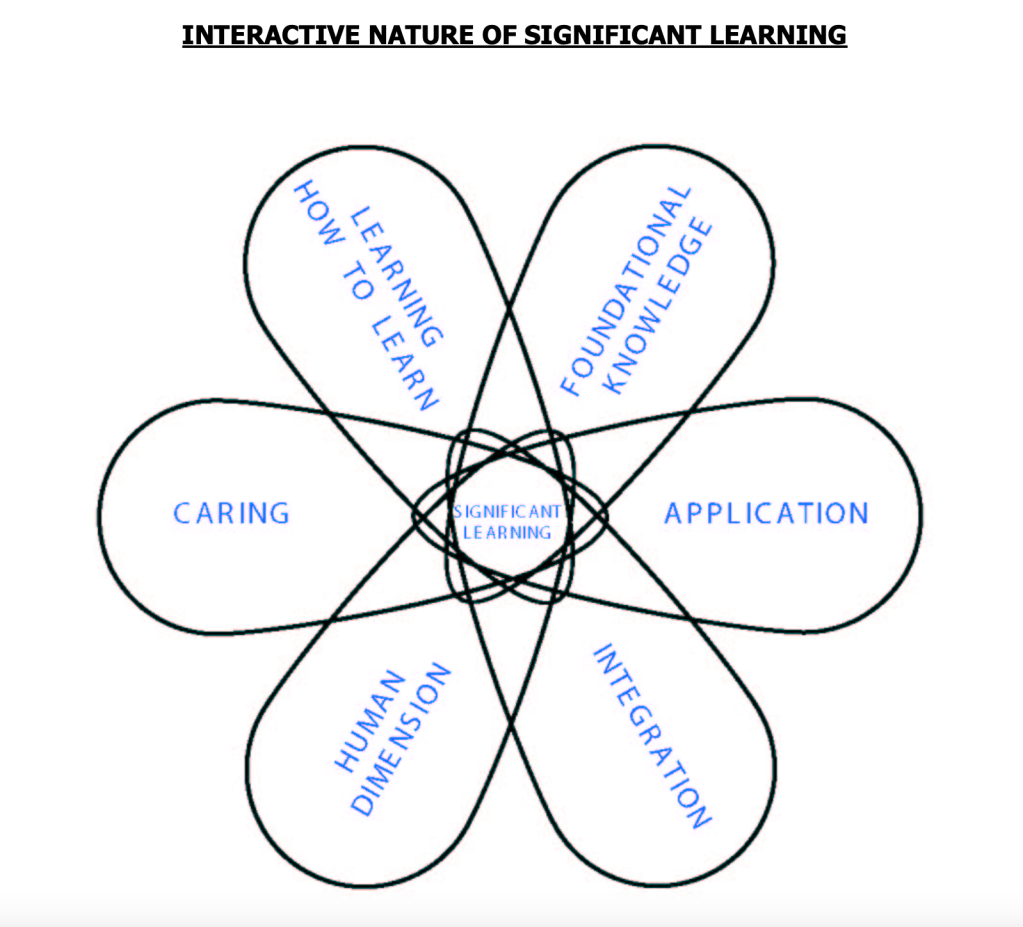
It is also worthwhile to explore how all of the pieces we have created are working together. One place to start is looking at Fink’s interactive nature of significant learning (Fink, 2013). This model outlines six areas that must be taken into account within a learning environment. These areas are foundational knowledge, application, integration, human dimension, learning how to learn, and caring. As we analyze how people, resources, tools, activities, and learning outcomes work together we can attend to creating significant learning environments with our educational partners.
Lessons Learned
There have been significant lessons learned throughout the development of my innovation plan. One of the biggest takeaways is all aspects of learning need to be considered. It’s not enough to have a plan. You must also have a thoughtful instructional design, a solid foundation of what research has been done on the topic you are working with, and ways of measuring the effectiveness of your plan.
Change is difficult. There will be resistance anytime change is implemented, but that does not mean the change is bad. It becomes crucial to understand your audience and have a strategy for influencing key stakeholders to support your innovation. Another lesson that I have learned is that there is no end to the learning. A great idea can still be improved upon. A functional process can be streamlined. A learning activity can be made more impactful by giving the learner choice, ownership, and voice over the activity. I have learned that every bump in the road is an opportunity to learn, grow, and improve. Failing forward allows me to take risks, learn from my mistakes, and constantly be moving forward. I am on a learning journey and I wouldn’t change a thing about that.
Application to Future Innovation
I am not currently promoting my innovation project due to the changes that render it unnecessary. However, in the future, I will use a multifaceted approach to promote a new project. Knowing what I now know, I will start by crafting a compelling narrative that highlights the project’s purpose, benefits, and potential impact. Then, I will engage key stakeholders through tailored messaging that resonates with their roles and concerns. I know how to create visually appealing content, such as infographics, slide decks, or videos to simplify complex concepts and enhance understanding. I will also do the work to review the literature related to my project to build credibility. I understand now that the whole process of innovating is cyclical. I will continuously be updating and iterating based on the project’s progress and evolving objectives.

References
Fink, L. D. (2013). Creating significant learning experiences: An integrated approach to designing college courses. John Wiley & Sons.
Grenny, J., Patterson, K., Maxfield, D., McMillan, R., & Switzler, A. (2013). Influencer: The new science of leading change (2nd ed.). McGraw-Hill Education.
 Facilitation Innovation